
A Breakthrough in Paleontology
Paleontologists have made an extraordinary discovery in a quarry in Southern Germany. They have uncovered the remains of a virtually complete, unknown pterosaur species, a specialized flying reptile.
This new species, “Altmuehlopterus,” is significant for several reasons. Pterosaurs were the first vertebrates to achieve powered flight, coexisting with dinosaurs during the Mesozoic Era.
Altmuehlopterus is named after the Altmühl River valley, where it was discovered. It had an estimated wingspan of about 4 meters and a long, toothless beak, indicating that it mainly fed on fish.
This discovery is fascinating because it provides new insights into the evolution and diversity of pterosaurs. Bavaria has been a rich source of pterosaur fossils, and this discovery highlights the need for further exploration and excavation in the area.
The experts were working on excavating alligator bones from a limestone block when they stumbled upon the discovery. The researchers distinguish the newly discovered species, naming it ‘Balaenognathus maeuseri.’ [i]
Newly Discovered Species Shed Light on Ancient Filter-Feeding
Recent data suggest that these newly discovered species are descended from the pterodactyloid pterosaurs clade, using ram filter-feeding as their feeding method. Ram filter-feeding involves moving forward while filtering food with an open mouth. Filter-feeders can locate food by moving through the water or by extracting small particles from the water as it passes through them.
The discovery of these species contributes to our understanding of the evolution of filter-feeding in ancient creatures. It is believed that pterodactyloid pterosaurs, the ancestors of these species, were among the first animals to use this feeding method.
Ram filter-feeding was likely an efficient way for them to gather food in their aquatic habitats. Interestingly, modern animals such as whales and certain fish species also use ram filter-feeding, highlighting the importance of adaptation and evolution for survival and success.
Further investigation into the feeding habits of these new species could provide valuable insights into their ecological roles in ancient environments, as well as the evolution of filter feeding and its significance in the history of life on Earth.

Balaenognathus maeuseri, gen. et sp. nov. (NKMB P2011-633): UV image Photo by D.M. Martill
New Predator Species Discovered through Unique Fossil Characteristics
Recently, fossils suggest that a new predator species have been identified. The fossils can be classified under a new species for two unique reasons: the triangular, broad, round-ended platform at the terminal end of the jaws has no teeth in the front of the mouth, and the teeth are longer than any other known species, with a hook on the crown tip.
These features suggest a distinctive hunting method and that this predator species may have specialized in targeting specific prey.
Scientists can analyze this species’ jaw and teeth morphology to determine its feeding behavior and compare it to other predators from the same Era. The length of teeth suggests that this species could have been at the top of the food chain or had a unique niche within its ecosystem.
Further research is required to establish the evolutionary relationship between this new species and other predators and to determine its role in the development of later species.
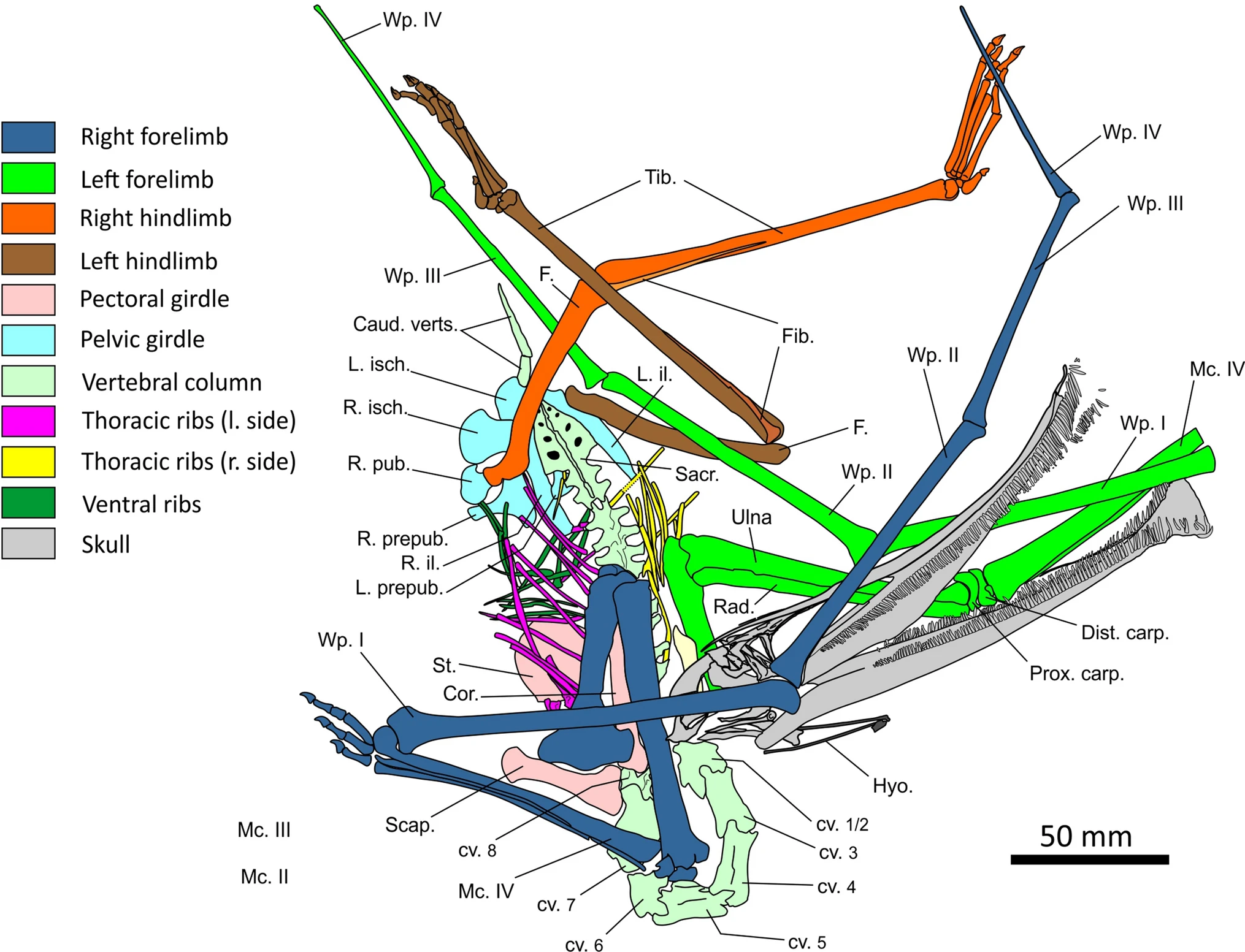
An interpretative drawing of the Balaenognathus maeuseri. Photo by D.M. Martill
Watch the video below for more information on filter feeding.
New Pterosaur Discovery Sheds Light on Unique Feeding Mechanism
Analysis of the animal’s teeth revealed a novel feeding mechanism employed as the pterosaur moved through the water. Specifically, the spoon-shaped beaks allowed the creatures to funnel water, using their teeth to trap prey in their mouths while squeezing out excess liquid.
This discovery provides new insights into the previously unknown feeding habits of pterosaurs. The spoon-shaped beaks enabled the pterosaurs to scoop up large amounts of water, filtering out any tiny organisms that might be present.
The teeth were used to apply pressure to the water, squeezing out any excess liquid and trapping any prey caught. Pterosaurs were also known to have a variety of feeding strategies, ranging from snatching prey from the air to scavenging on the ground. This discovery adds another layer to our understanding of how these creatures survived and thrived during their time on Earth.
The researchers who discovered this also suggest that the pterosaurs may have been capturing small fish and other aquatic creatures using their unique feeding mechanism. This would have given them a competitive advantage and allowed them to take advantage of a food source unavailable to other flying creatures of their time.

Possible methods of suspension feeding. Photo by D.M. Martill
Unveiling a Newly Discovered Mesozoic Era Reptile with Unique Flying Abilities
Recent discoveries reveal that a long-legged and spatula-beaked reptile existed for most of the Mesozoic Era. The snakes had “paper-thin bones, long and skinny fingers, wings of skin, and front-loaded bodies.” Unfortunately, while these distinct traits made them exceptional fliers, they were poor fossilizers, making their remains rare and valuable.
The reptiles’ paper-thin bones suggest they were adapted for flight but may have been fragile and susceptible to injury. However, their long and skinny fingers likely supported a wing membrane similar to that of bats, enabling the reptiles to fly. Additionally, their front-loaded bodies would have provided balance and stability in the air.
This discovery highlights the incredible diversity of life during the Mesozoic Era and the various adaptations that enabled creatures to thrive in different environments. It also emphasizes the significance of studying fossils to gain insights into the history of life on Earth.
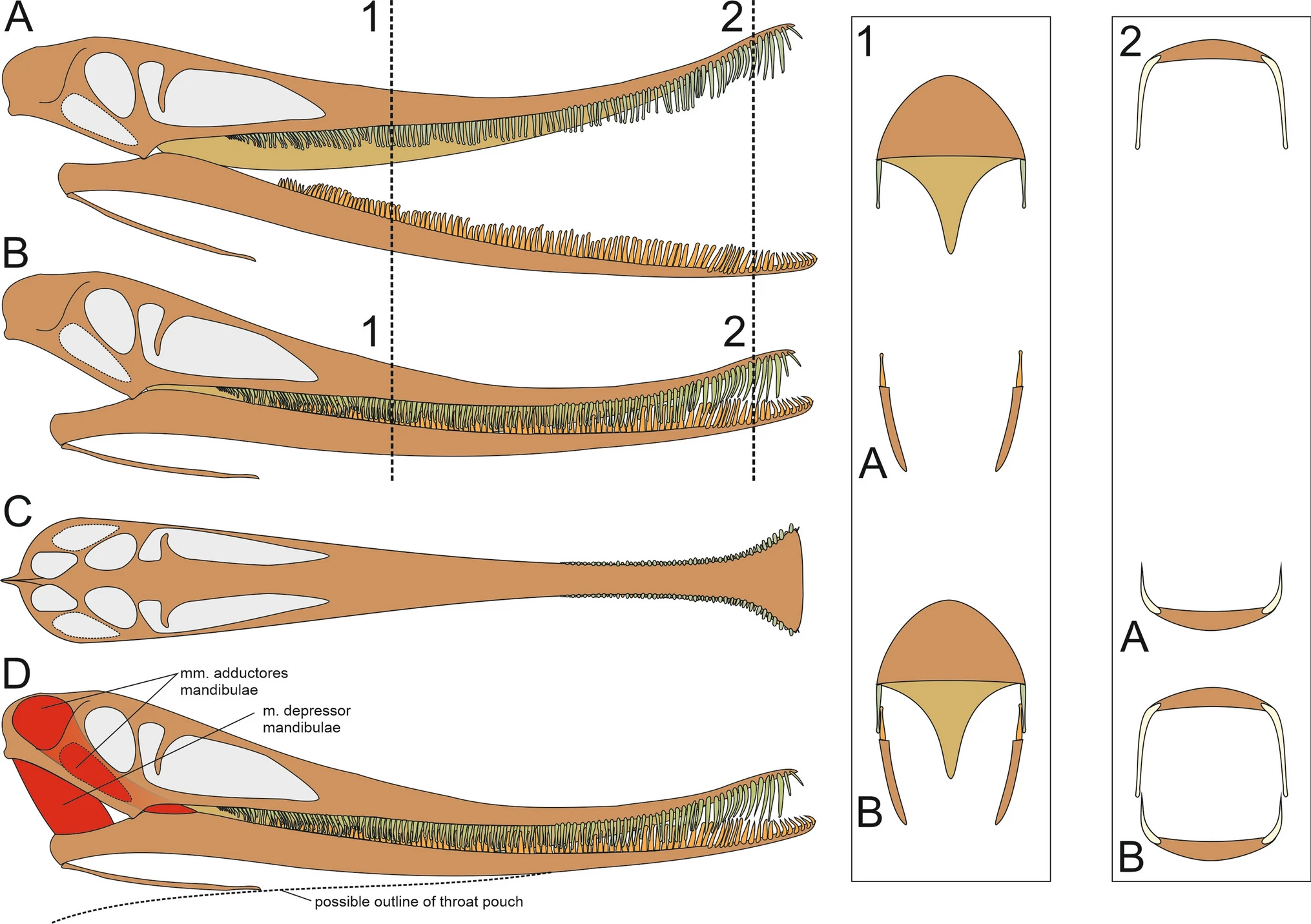
Interpretive drawing of the Balaenognathus maeuseri skull. Photo by D.M. Martill
References
[i] David M. Martill et al., A new pterodactyloid pterosaur with a unique filter-feeding apparatus from the Late Jurassic of Germany (Jan. 21, 2023)
[ii] Id.
[iii] Jennifer Perez, How Does Filter Feeding Work? (Aug. 4, 2022)
[iv] David M. Martill et al., A new pterodactyloid pterosaur with a unique filter-feeding apparatus from the Late Jurassic of Germany (Jan. 21, 2023)
[v] Natalia Jagielska, Stephen L. Brusatte, Pterosaurs – Current Biology, (Aug. 23, 2021)
[vi] David M. Martill et al., A new pterodactyloid pterosaur with a unique filter-feeding apparatus from the Late Jurassic of Germany (Jan. 21, 2023)
[vii] Id.
Chick-fil-A says in a new interview that its purpose to Glorify God is why the restaurant continues to remain successful

During a recent interview with Don Yaeger, contributing editor at Chief Executive, Dan Cathy, Chairman of Chick-fil-A, discusses leadership. The son of Chick-fil-A’s founder, Cathy spent a great portion of his life refining and expanding upon his father’s vision. He shares with Yaeger nostalgic memories of the Dwarf House, as Chick-fil-A was originally known. [i]…
Many express mixed emotions after governor recently cancels renewal of the state's Walgreens contract due to abortion pill

The California Department of General Services notified Walgreens on Wednesday, March 8, 2023. The notice advised the state would not renew its contract valued at $54 million. This contract was set to expire at the end of the fiscal year. Why did California decide not to renew the contract? The decision to not renew the…
PayPal's New Sticky Situation: Honey Accused Of Massive Creator Exploitation

Picture this: You build a successful online business. Then, a big tech company swoops in and takes your profits. That's what Instagram influencer Claudia Jayne Young and many others say PayPal's Honey is doing. Key Points The Sweet Turned Sour: Honey's Sticky Situation On January 3, 2025, Young filed a class-action lawsuit. She claims, Through…
Ukrainian Soldiers Smile Ear to Ear, Celebrate Recent Risky Win; Short Raw Video Reveals Quick Missile Attack on Tank
%27%20fill-opacity%3D%27.5%27%3E%3Cellipse%20fill%3D%22%23535454%22%20fill-opacity%3D%22.5%22%20rx%3D%221%22%20ry%3D%221%22%20transform%3D%22matrix(201.84616%2080.75663%20-38.14033%2095.32936%20568.2%20338.7)%22%2F%3E%3Cellipse%20fill%3D%22%23dbdcdc%22%20fill-opacity%3D%22.5%22%20rx%3D%221%22%20ry%3D%221%22%20transform%3D%22matrix(123.0023%2080.79741%20-44.3574%2067.52769%20286.5%2038)%22%2F%3E%3Cellipse%20fill%3D%22%23dadbdb%22%20fill-opacity%3D%22.5%22%20rx%3D%221%22%20ry%3D%221%22%20transform%3D%22matrix(36.2397%20-60.79265%2099.39461%2059.25108%20160.1%20302.5)%22%2F%3E%3Cellipse%20fill%3D%22%23494949%22%20fill-opacity%3D%22.5%22%20rx%3D%221%22%20ry%3D%221%22%20transform%3D%22matrix(-80.10197%20-1.95765%201.68321%20-68.8726%20566%20338.7)%22%2F%3E%3C%2Fg%3E%3C%2Fsvg%3E)
A video recently surfaced revealing Ukrainian anti-tank missiles destroying Russian armored vehicles. In the footage, Ukrainian soldiers used both Stugna-P's, manufactured in Ukraine, and British-built Javelin missiles. [i] One Ukrainian soldier explained that often they will "dig trenches there and wait for a target." They also stated that it may be a week or a […]
Russians refuse to accept a recent reasonable offer to trade him
%27%20fill-opacity%3D%27.5%27%3E%3Cpath%20fill%3D%22%23070a09%22%20fill-opacity%3D%22.5%22%20d%3D%22M543.7%20276.5l-301%20115.6-64.6-168%20301.1-115.6z%22%2F%3E%3Cellipse%20fill%3D%22%23aca2a5%22%20fill-opacity%3D%22.5%22%20rx%3D%221%22%20ry%3D%221%22%20transform%3D%22matrix(22.2153%2088.765%20-232.94528%2058.29946%20208%2059.4)%22%2F%3E%3Cellipse%20fill%3D%22%23d6a5b5%22%20fill-opacity%3D%22.5%22%20rx%3D%221%22%20ry%3D%221%22%20transform%3D%22matrix(-20.87095%20-46.65758%2057.4258%20-25.6878%20110.6%2093.3)%22%2F%3E%3Cellipse%20fill%3D%22%23080808%22%20fill-opacity%3D%22.5%22%20rx%3D%221%22%20ry%3D%221%22%20transform%3D%22matrix(73.62288%20-49.61652%2025.70574%2038.14316%20445.1%20236.6)%22%2F%3E%3C%2Fg%3E%3C%2Fsvg%3E)
Now, a soldier & POW feels low and questions his value Recent reports indicate that a Russian prisoner speaking with his grandmother "informed his family that Putin's military had refused offers for an exchange." This information confirms reports that Russian soldiers are being used as "cannon fodder." [i] Cannon fodder is "[a] soldier regarded or […]