
The National Rifle Association (NRA) along with private citizens and other organizations, has filed a lawsuit regarding California’s Handgun Roster. This roster is a list of handguns approved for sale in California. The NRA claims the roster unfairly bans many popular guns, limiting lawful gun owners’ choices and infringing on Second Amendment rights.
This article explains what the California handgun roster is, why the NRA is suing, and the arguments from both sides.
Estimated reading time: 8 minutes
Table of contents
What is the California Handgun Roster?
The California Handgun Roster, sometimes called the CA handgun roster or California gun roster, is a state rule that decides which handguns licensed dealers can sell in California. To get on the roster, a handgun must pass safety tests set by the California Department of Justice.
These safety tests include:
- Drop safety tests to ensure the gun does not fire if dropped
- Firing tests to verify reliability
- Microstamping requirements, which involve etching a unique code onto cartridge casings when the gun is fired
Microstamping technology helps law enforcement trace guns used in crimes by linking spent cartridge casings to a specific firearm. The goal is to make it easier to solve crimes and improve public safety.
Only guns that meet these requirements are listed on the California approved handgun list. The roster is updated regularly. New guns on the California handgun roster must meet the latest safety standards before they can be sold. If a gun does not meet new rules or the maker does not submit it for approval, it can be taken off the list.
This means the roster changes over time as safety standards change and as manufacturers adapt to the rules.
Why is the NRA suing?
The NRA’s handgun roster lawsuit challenges the California handgun roster law on several reasons. They say the roster is too strict and bans many commonly owned handguns. According to the NRA, this limits the rights of lawful gun owners under the Second Amendment.
A main issue in the lawsuit is that the roster removes guns that do not meet new safety rules. Critics say this is basically a ban on guns. Supporters argue that only guns failing safety standards are removed, not just any guns.
The NRA also says the microstamping rule is expensive and hard to follow. They claim it makes some manufacturers leave the California market instead of meeting the rule. This means fewer guns are available for sale, which limits choices for buyers.
The lawsuit aims to overturn the California handgun roster law, saying it violates constitutional rights and hurts lawful gun owners.
What are the arguments for the roster?
Supporters of the California handgun roster say it improves public safety by making sure only safe guns are sold. They believe the roster helps prevent accidents and lowers gun violence.
Microstamping is an important part of this safety effort. By putting a unique code on cartridge casings, microstamping helps police trace guns used in crimes. This can lead to quicker arrests and help stop gun trafficking.
The roster also pushes gun makers to improve safety technology. It sets a high bar that manufacturers must meet to sell guns in California. This can lead to new and better safety features in firearms.
Because California has high rates of gun violence, supporters see the roster as a needed tool. They believe it helps keep dangerous guns off the streets and keeps people safe.
The roster also makes exceptions for law enforcement and for secondary sales, which supporters say balances safety with practical needs.
Microstamping Technology & Crime-Solving
Laser Engraving
A unique code is laser-etched onto the firing pin and breech face inside the handgun.
Gun Fired
When the gun is fired, the firing pin strikes the cartridge primer, transferring the code.
Crime Scene
Cartridge casings with the unique microstamp code are recovered at crime scenes.
Investigation
Law enforcement uses the microstamp code to trace the gun and identify its owner, aiding crime-solving.
Microstamping provides a forensic tool that helps connect cartridge casings to specific firearms. This technology supports faster investigations, deters illegal gun trafficking, and enhances public safety.
What are the arguments against the handgun roster?
Opponents, including the NRA, say the roster is too strict and harms lawful gun owners. They argue it makes manufacturers take many popular models off the market, so there are fewer guns to choose from.
Some people say the microstamping rule is costly and hard to put in place. Gun makers like Smith & Wesson and Ruger have stopped selling some pistols in California instead of following the rule. As a result, there are fewer guns on the California gun roster.
Critics also say the roster does not do much to stop criminals. Most guns used in crimes are gotten illegally, so the roster’s rules do not apply. They argue the law mostly makes things harder for law-abiding people who want to buy guns.
Some opponents say criminals can get around microstamping by removing or changing the markings. They also worry that the extra cost, which could be anywhere from a few dollars to over $200 per gun, will be passed on to buyers.
What does the law say about new guns on the California handgun roster?
New guns on the California handgun roster must pass safety tests and microstamping rules. Senate Bill (SB) 452 requires microstamping on semiautomatic pistols. This technology etches a unique code on cartridge casings, helping police trace guns used in crimes.
However, microstamping is a debated topic. Some studies say it works well, but others find it can be bypassed or is expensive to use. The law also makes exceptions for law enforcement and secondary sales, which critics say are loopholes. Some manufacturers refuse to follow the rules, so fewer new guns are added to California’s approved handgun list.
The law also says microstamping technology must be available without patent restrictions, which has delayed putting it into use.
Timeline: California Handgun Roster & SB 452 Implementation
What is at stake?
The NRA’s lawsuit could change how California handles handgun rules. If the NRA wins, the state might have to relax the roster rules. This could mean more guns for sale and more choices for buyers.
If the state wins, the roster will stay strict. This could keep some guns off the market but might also limit choices for buyers. It could also lead other states to set up similar safety rules.
Both sides want to reduce gun violence but disagree on how to balance safety and gun rights. This case brings up big questions about government power, public safety, and personal freedoms.
The result of this case could also affect the gun industry. Manufacturers might choose to follow strict laws or leave certain markets.
Wrapping up
California’s handgun roster is a complicated issue that tries to balance gun safety with gun rights. The NRA’s lawsuit questions whether the roster is fair and how it affects gun owners.
Consider both sides carefully. The roster aims to protect public safety but also limits gun availability. We have to think deeply about how best to reduce gun violence while respecting rights.
This issue is about more than just guns. It’s about how society balances safety, technology, and constitutional rights. As the legal fight continues, it will help shape the future of gun laws in California and maybe in other places too.
| NRA Wins | California Wins |
|---|---|
|
Loosening of Roster Rules: California may have to relax handgun roster restrictions, allowing more guns to be sold. Increased Gun Availability: More popular handgun models could return to the market, expanding consumer choice. Second Amendment Rights: Gun owners may experience fewer limits on lawful firearm purchases. Legal Precedent: Could influence other states to reconsider strict handgun regulations. |
Roster Remains Strict: California handgun roster and microstamping requirements stay in place. Limited Gun Selection: Some handgun models remain off the market due to non-compliance. Focus on Public Safety: Continued emphasis on reducing gun violence through safety standards. Industry Impact: Manufacturers may continue to limit sales or innovate to meet requirements. |
|
Market Response: Gun manufacturers may increase sales in California and similar states. Potential Reduction in Safety Measures: Some safety features like microstamping might be weakened or removed. Political Impact: Strengthens gun rights advocacy and challenges to firearm regulations nationwide. |
Innovation Incentives: Encourages firearm manufacturers to develop safer guns and technologies. Legal Challenges Continue: Ongoing lawsuits may refine or adjust roster laws. Public Awareness: Reinforces California’s role as a leader in gun safety legislation. |
Dig Deeper: Explore These CA Handgun Roster Resources
- Microstamping: Hot Lead Or Dud Round?
A detailed law review article by Andrew Punzo exploring microstamping technology, its development, and controversies. This version is open access and does not require login.
Read the full article - Legal Complaint: Renna v. Bonta
The full text of the NRA’s amended complaint challenging California’s handgun roster law.
NRA Lawsuit PDF - California Handguns Certified for Sale
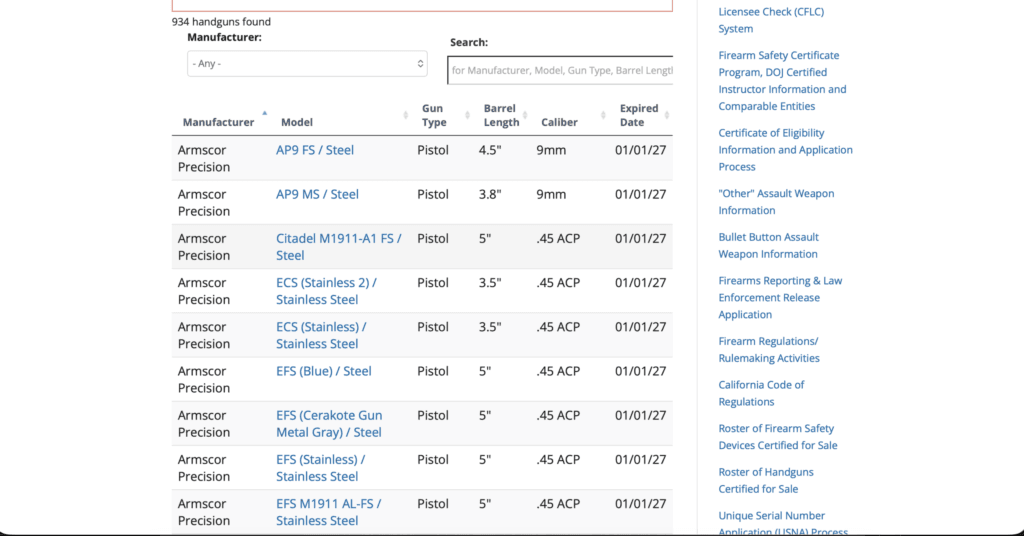
The official California Department of Justice searchable list of handguns approved for sale under the roster.
CA DOJ Certified Handguns - Senate Bill 452 (SB 452) Microstamping
Details on California’s microstamping legislation requiring unique codes on cartridge casings.
CA DOJ SB 452 - California Handgun Roster Explained
A comprehensive overview of the roster’s rules, history, and impact from FirearmsPolicy.org.
FirearmsPolicy.org California Handgun Roster - NRA Seeks to Invalidate California’s Handgun Roster in Legal Challenge
The NRA’s official statement and overview of their lawsuit against California’s handgun roster.
NRAILA Article


