What Is Ultra-Processed Food and Why Does It Matter?
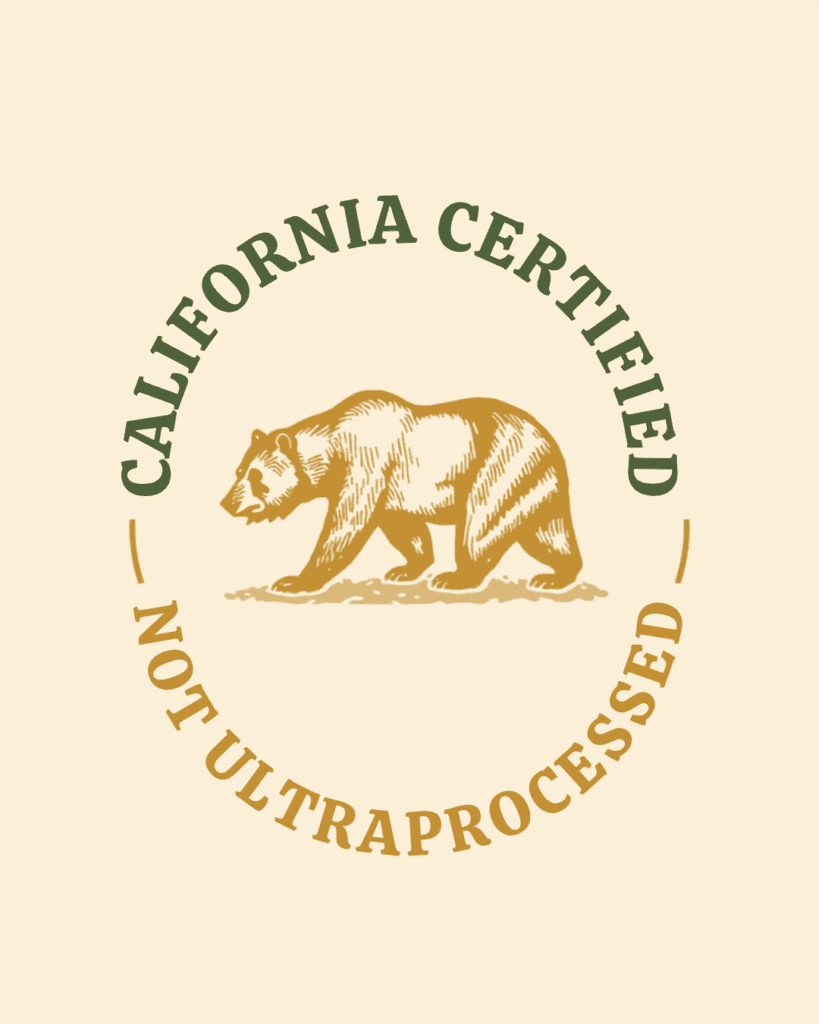
California lawmakers want to create a new food label. Assembly Bill 2244 would let food companies put a special seal on their products. The seal would say “California Certified Not Ultra-Processed.” But what is ultra-processed food? And will this new label actually help people make better choices?
Estimated reading time: 16 minutes
Table of contents
- What Is Ultra-Processed Food and Why Does It Matter?
- The Proposed California Label Explained
- What Foods Would Qualify for the Label?
- Is This Label Different From Others?
- What Is Considered Ultra-Processed Food Under Different Systems?
- Common Questions About Ultra-Processed Foods
- Will The Not Ultra-Processed Label Actually Help Californians?
- The Problem With Voluntary Labels
- What Does Ultra-Processed Food Mean for Health?
- How Food Companies Hide Ultra-Processed Ingredients
- Will California’s Label Address These Issues?
- What Experts Say About Food Labels Like Not Ultra-Processed
- The History of “Healthy” Food Labels
- How This Affects Low-Income Californians
- What Happens Next With the Not Ultra-Processed Bill?
- Similar Bills and Their Results
- The Bottom Line: Help or Hype?
- What Shoppers Can Do Now
- Conclusion
What is processed food? Processing means changing food from its natural state. For example, washing lettuce is processing. Likewise, freezing vegetables is processing. It is important to realize that not all processing is bad. What is an ultra-processed food? Ultra-processed foods contain ingredients you wouldn’t use at home. Specifically, these include artificial colors, flavors, sweeteners, and chemicals that make food last longer.
The Proposed California Label Explained
Assembly member Jesse Gabriel introduced AB 2244 in March 2025. Similarly, he also created California’s Food Safety Act and School Food Safety Act. The new seal would look like the USDA Organic label. Of course, it would feature the California Republic bear. Consequently, food companies could choose to use it if their products meet certain standards. What are ultra-processed foods that wouldn’t qualify? Products with certain colorants, flavorings, sweeteners, emulsifiers, and thickening agents would not get the seal. The bill requires stores to display certified products in high-traffic areas for the purpose of making them easier for shoppers to find.
What Foods Would Qualify for the Label?
California is still defining ultra-processed food standards. As a result, the state’s Office of Environmental Health Hazard Assessment must create specific rules by July 1, 2026. Federal officials may also create a national definition soon. For example, U.S. Health Secretary Robert F. Kennedy Jr. promised a federal definition by April 2026.
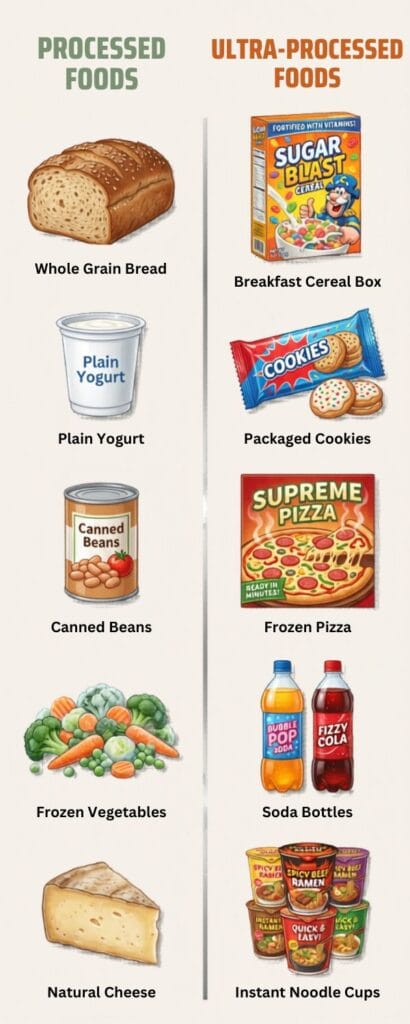
To illustrate, ultra-processed food list examples that would NOT qualify:
- Most breakfast cereals with added sugars
- Packaged snack cakes and cookies
- Frozen pizza with artificial ingredients
- Soda and sweetened drinks
- Chicken nuggets with additives
- Instant noodles and soups
What are processed foods that MIGHT qualify:
- Plain yogurt without additives
- Whole-grain bread with simple ingredients
- Cheese made with basic ingredients
- Canned beans without added chemicals
- Frozen vegetables without sauces
Original graphic by DOPEQuickReads/SDOCNews
Is This Label Different From Others?
In reality, many food labels already confuse shoppers. Terms like “natural,” “healthy,” and “better for you” often mean very little. The FDA doesn’t define “all-natural.” In sum, companies can use this term freely. A product can be “natural” but still unhealthy. Research shows 84% of foods marketed to children fail basic nutrition standards. Without a doubt, many products claim health benefits without proof.
Examples of misleading labels:
- “Made with real fruit” (contains less than 2% fruit)
- “Good source of calcium” (has only 60mg)
- “All natural” (contains artificial flavors)
- “Healthy” (loaded with sugar)
What Is Considered Ultra-Processed Food Under Different Systems?
The NOVA food classification system divides foods into four groups. This system helps identify ultra-processed foods.
- NOVA Group 1: Unprocessed or minimally processed foods (fresh fruits, vegetables, eggs, milk)
- NOVA Group 2: Processed culinary ingredients (oil, butter, sugar, salt)
- NOVA Group 3: Processed foods (canned vegetables, cheese, fresh bread)
- NOVA Group 4: Ultra-processed foods (soft drinks, packaged snacks, instant meals)
California’s definition will likely follow NOVA guidelines. But the exact standards remain unclear.
Common Questions About Ultra-Processed Foods
Is bread an ultra-processed food? It depends. Fresh bakery bread with flour, water, yeast, and salt is not ultra-processed. Store-bought bread with preservatives and dough conditioners is ultra-processed.
Is bread processed food? Yes, all bread is processed. But to clarify, simple bread is minimally processed, not ultra-processed.
Is cheese ultra-processed food? Basic cheese made from milk, cultures, and enzymes is not ultra-processed. Cheese with many additives and emulsifiers is ultra-processed.
Is cheese a processed food? Yes, making cheese requires processing milk. But traditional cheese is not ultra-processed.
Is yogurt ultra-processed? Plain yogurt with milk and cultures is not ultra-processed. Yogurt with artificial sweeteners, colors, and flavors is ultra-processed.
Is butter ultra-processed? No, butter made from cream is minimally processed.
Is peanut butter ultra-processed? Natural peanut butter with just peanuts and salt is not ultra-processed. Brands with added sugars, oils, and stabilizers are ultra-processed.
Is tofu ultra-processed food? Traditional tofu made from soybeans, water, and a coagulant is not ultra-processed.
Is pasta ultra-processed? Dried pasta made from wheat and water is not ultra-processed. Instant noodles with flavor packets are ultra-processed.
Is pizza ultra-processed food? Homemade pizza is not ultra-processed. Frozen pizza with many additives is ultra-processed.
Are Cheerios ultra-processed? Yes, most commercial cereals, including Cheerios, are considered ultra-processed.
Quick Reference: Is This Food Ultra-Processed?
🔴 ULTRA PROCESSED (Avoid or Limit)
🟡 IT DEPENDS (Check the Label)
Look for short ingredient lists with recognizable items
🟢 NOT ULTRA PROCESSED (Good Choices)
Quick Tip: If the ingredient list has more than 5 items or includes words you don’t recognize, it’s likely ultra-processed.
Will The Not Ultra-Processed Label Actually Help Californians?
The voluntary nature of this label creates problems. First, companies can choose whether to seek certification. If a product lacks the seal, shoppers won’t know why. This confusion already exists with other voluntary labels. For example, the “Smart Choices” program failed in 2009. It labeled Froot Loops and Cocoa Puffs as healthy choices.
Potential benefits:
- Gives shoppers a quick way to identify less processed foods
- May encourage companies to reformulate products
- Could increase awareness about ultra-processed foods
- Provides consistent standards (once defined)
Potential problems:
- Voluntary participation limits usefulness
- May confuse shoppers if inconsistently used
- Doesn’t address all health concerns
- Could mislead people about overall nutrition
The Problem With Voluntary Labels
Research shows mandatory labels work better than voluntary ones. When labels are optional, they create confusion. Shoppers see two similar products. One has a health label. The other doesn’t. Why? Maybe the unlabeled product doesn’t qualify. Or maybe the company chose not to participate. Nevertheless, shoppers can’t tell the difference. Conversely, countries with mandatory front-of-package labels see better results. By comparison, Chile requires warning labels on unhealthy foods. As a result, purchases of those foods dropped 7% after the labels appeared. Similarly, Canada will require front-of-package nutrition labels by 2026. These mandatory systems give shoppers consistent information.
Global Food Labeling Systems
Which countries require mandatory front-of-package nutrition labels?
🌎 North America
Mandatory by 2026
Voluntary only
Mandatory warnings
🌎 South America
Mandatory since 2016
Mandatory warnings
Mandatory warnings
Mandatory warnings
Mandatory warnings
Mandatory warnings
Traffic light system
🌍 Europe
Voluntary traffic lights
Voluntary Keyhole
Voluntary Heart Symbol
Voluntary Nutri-Score
Voluntary system
Voluntary system
🌍 Middle East & Africa
Mandatory warnings
Voluntary system
Voluntary system
Voluntary system
Voluntary system
🌏 Asia & Pacific
Mandatory warnings
Mandatory Nutri-Grade
Mandatory traffic lights
Mandatory system
Voluntary Health Star
Voluntary Health Star
Voluntary system
Voluntary system
Voluntary Healthier Choice
Voluntary system
📊 Key Insights
- South America leads with the most mandatory labeling systems
- Chile was first to implement mandatory warning labels in 2016
- Europe mostly uses voluntary systems like traffic lights and Nutri-Score
- United States lags behind with only voluntary industry programs
- Studies show mandatory labels reduce unhealthy food purchases by 7-20%
📍 Where does California fit? The proposed “California Certified” seal would be voluntary, placing it in the orange category alongside most U.S. and European programs.
What Does Ultra-Processed Food Mean for Health?
The meaning of ultra-processed food goes beyond just processing. These foods often contain high amounts of sugar, salt, and unhealthy fats.
Studies link ultra-processed foods to these health problems:
- Obesity
- Heart disease
- Type 2 diabetes
- High blood pressure
- Some cancers
Americans get about 60% of their calories from ultra-processed foods. This is higher than most other countries. The book “Ultra Processed People” by Chris van Tulleken explores these health risks. He explains how these foods are designed to make people eat more.
How Food Companies Hide Ultra-Processed Ingredients
Food labels use confusing terms. These hide what’s really in products. “Natural flavors” can include hundreds of chemicals. Companies don’t have to list them individually. The same goes for “artificial flavors” and “spices.” Some “natural” ingredients are stranger than artificial ones:
- Ambergris (from whale digestive systems)
- L-cysteine (from duck feathers or human hair)
- Castoreum (from beaver glands)
These all qualify as “natural flavors.” But most shoppers would never guess.
🔍 What’s Really in Your Food?
Decoding Vague Ingredient Terms on Food Labels
⚠️ Did you know? Food manufacturers can hide hundreds of ingredients behind just a few vague terms. These catch-all phrases make it nearly impossible for consumers to make informed health and ethical choices.
3,900+
Food additives can be hidden under just 3 vague terms:
“artificial flavor,” “natural flavor,” and “artificial coloring”
A waxy substance generated in the digestive system of sperm whales and regurgitated
A dough conditioner often derived from duck feathers or human hair
Secretion from the castor sacs of beaver glands, used for vanilla flavoring
The musk that gives the Musk deer its name
Can be used in chicken products (e.g., Wendy’s Grilled Chicken Sandwich contains beef extracts)
When derived “naturally,” contains trace amounts of cyanide
Any flavor not derived through “natural” processes (roasting, heating, or enzymolysis)
Made by mixing oil of clove and amyl acetate—contains NO cyanide, unlike the “natural” version
Often produced in the same facilities by the same chemists as “natural” flavors
Known allergen that must be listed, but other colors can be grouped
Red coloring made from crushed insects; known allergen
Red 40, Blue 1, and others linked to hyperactivity in children
Beef tallow, gelatin, and lard can all be covered by “spices” label
May contain ingredients that trigger allergic reactions in sensitive individuals
Animal extracts from one species used in products of another
Will California’s Label Address These Issues?
The proposed bill doesn’t fix ingredient labeling problems. It only creates a new front-of-package seal. Products could still hide ingredients under vague terms. They could still use misleading health claims. The seal only addresses whether foods are ultra-processed. The bill also doesn’t require companies to explain why products don’t qualify. This leaves shoppers guessing.
What Experts Say About Food Labels Like Not Ultra-Processed
Chiefly, nutrition experts want clearer, more honest labels. But they disagree on the best approach. Some support traffic light systems. These use red, yellow, and green to show nutrition levels. The UK uses this voluntary system. Others prefer star ratings. Australia uses a Health Star Rating from 0.5 to 5 stars. Many experts say mandatory labels work best. Voluntary programs let companies choose what to show. This creates inconsistency. The Institute of Medicine recommends mandatory front-of-package labels. These should show calories, saturated fat, sodium, and sugar.
The History of “Healthy” Food Labels
Previously, the FDA defined “healthy” in 1994. That definition focused on limiting fat. It didn’t address sugar. This led to problems. Sugary cereals could claim to be healthy. Nuts couldn’t, because of the fat content. The FDA proposed a new “healthy” definition in 2022. It includes limits on added sugar. But this label is also voluntary. Food companies fought against stricter standards. They spent millions lobbying Congress. Many proposed improvements never became law.
How This Affects Low-Income Californians
Surprisingly, the label may not help people who struggle to afford food. These families often rely on shelf-stable processed foods. Fresh produce spoils quickly. Many low-income families lack reliable transportation. They can’t shop frequently for fresh foods. Food pantries often can’t store fresh or frozen items. They provide canned and packaged goods instead. The new label would appear mainly on fresh or minimally processed foods. These are often more expensive and less accessible. This could widen health gaps between rich and poor Californians.
Price Comparison: Ultra-Processed vs. Minimally Processed Foods
Understanding the true cost of food choices and their impact on low-income families. Prices shown are approximate averages based on national retail data.
| Food Category | Ultra-Processed Option | Price | Minimally Processed Option | Price | Difference |
|---|---|---|---|---|---|
| BREAKFAST FOODS | |||||
| Cereal | Sugary cereal (18 oz) | $4.99 | Plain oats (42 oz) | $5.49 | $0.50 more (3x servings) |
| Breakfast Bars | Granola bars (6 pack) | $4.29 | Fresh fruit (6 apples) | $5.94 | $1.65 more |
| SNACKS | |||||
| Chips/Crisps | Potato chips (10 oz) | $3.99 | Fresh vegetables (2 lbs) | $4.98 | $0.99 more |
| Fruit Snacks | Fruit gummies (8 oz) | $3.49 | Fresh berries (1 lb) | $6.99 | $3.50 more |
| MAIN MEALS | |||||
| Pizza | Frozen pizza (family size) | $6.99 | Fresh ingredients for homemade | $12.50 | $5.51 more |
| Chicken Nuggets | Frozen nuggets (2 lbs) | $7.99 | Fresh chicken breast (2 lbs) | $9.98 | $1.99 more |
| Instant Meals | Instant ramen (12 pack) | $3.99 | Dried pasta + vegetables | $6.48 | $2.49 more |
| BEVERAGES | |||||
| Soft Drinks | Soda (12-pack cans) | $5.99 | 100% fruit juice (64 oz) | $4.99 | $1.00 less |
| Flavored Drinks | Sports drinks (8-pack) | $7.99 | Fresh fruit for water infusion | $4.99 | $3.00 less |
| SHELF-STABLE OPTIONS | |||||
| Vegetables | Canned vegetables w/ sauce | $2.49 | Frozen plain vegetables | $2.99 | $0.50 more |
| Beans | Canned beans w/ additives | $1.79 | Dried beans (1 lb) | $1.99 | $0.20 more (5x servings) |
Key Findings on Food Accessibility & Cost
- Initial Cost Barrier: Minimally processed foods often cost 25-100% more upfront, creating a significant barrier for low-income families.
- Shelf Life Concerns: Fresh produce spoils quickly, making it impractical for families without reliable transportation or frequent shopping access.
- Food Pantry Limitations: Only 75% of food pantry sessions have equipment for refrigerated/frozen items, limiting access to fresh foods.
- Hidden Value: While some minimally processed options (like oats and dried beans) offer better per-serving value, they require more preparation time and knowledge.
- The “Healthy” Label Gap: California’s proposed “Not Ultra-Processed” label would primarily appear on more expensive, less accessible foods, potentially widening health disparities.
- Transportation Factor: Low-income families often lack reliable transportation for frequent fresh food shopping, making shelf-stable ultra-processed foods more practical.
What Happens Next With the Not Ultra-Processed Bill?
California’s Office of Environmental Health Hazard Assessment must define ultra-processed foods soon, by July 1, 2026. However, the federal government may create its own definition first. This could happen as soon as April 2026. If federal and state definitions differ, confusion will increase. Additionally, companies selling in multiple states would face different rules. The bill doesn’t set a deadline for when labels must appear., so companies could delay participation indefinitely.
Similar Bills and Their Results
Similarly, California has passed other food safety laws recently. That is, the California Food Safety Act banned certain toxic chemicals in food. The School Food Safety Act also removed ultra-processed foods from school lunches. At this time, early results show this improved student nutrition. But those laws were mandatory, so companies had to comply. Conversely, the new label is voluntary, which limits its impact. Since other states watch California’s food laws closely, if this label succeeds, other states may copy it.
The Bottom Line: Help or Hype?
California’s proposed label has good intentions. It aims to help shoppers identify less processed foods quickly. But the voluntary nature creates serious problems. Without mandatory participation, the label may confuse more than clarify. The bill also doesn’t address other misleading labels. Terms like “natural” and “healthy” will still mean little.
For the label to truly help Californians, it needs changes:
- Make participation mandatory
- Require clear explanations when products don’t qualify
- Include more affordable shelf-stable foods
- Coordinate with federal definitions
- Add enforcement mechanisms
Consequently, without these improvements, this label may join the long list of meaningless food marketing terms.
State Food Labeling & Safety Laws Across America
Tracking state-level legislation on food additives, ultra-processed foods, and labeling requirements (2024-2026)
States with Enacted Laws Active
- California: Food Safety Act (2024) – First state to ban specific food additives; School Food Safety Act; AB 2244 “Not Ultra-Processed” label (proposed 2025)
- Louisiana: SB 14 (2025) – Warning labels for 44 ingredients including artificial sweeteners; effective Jan 2028
- Texas: SB 25 (2025) – Warning labels for 44 ingredients; effective Jan 2027
- Oklahoma: Food additive restrictions enacted 2024
School-Only Restrictions Limited Scope
- Virginia: SB 1289 – Bans 7 color additives from school meals (effective July 2027)
- West Virginia: HB 2354 – Bans color additives from school nutrition programs (effective Aug 2025)
States with Pending Legislation Under Review
- Alaska: AB 1264 – Ultra-processed food restrictions in schools
- Delaware: SB 41 – Ban on Red Dye No. 3
- Florida: Multiple bills restricting additives in schools
- Georgia: HB 1014, HB 642 – School food additive bans
- Hawaii: SB 2236 – Baby food additive restrictions
- Illinois: PFAS packaging ban, baby food heavy metal limits
- Indiana: Multiple bills on school foods and warning labels
- Iowa: HF 212 – School food restrictions
- Kansas: Food additive legislation pending
- Missouri: Warning label requirements
- New Hampshire: SB 557 – School food dye restrictions
- New Jersey: Food additive bans and PFAS packaging restrictions
- New York: Multiple food safety bills
- Alabama, Arizona, Colorado, Connecticut, Maine, Maryland, Massachusetts, Minnesota, Nevada, Utah, Wyoming: Various food safety and labeling bills under consideration
Common Targeted Ingredients
- Color Additives: Red 3, Red 40, Yellow 5, Yellow 6, Blue 1, Blue 2, Green 3
- Preservatives: BHA, BHT, potassium bromate, propyl paraben
- Other Additives: Brominated vegetable oil (BVO), titanium dioxide, TBHQ
- Packaging Chemicals: PFAS (“forever chemicals”), bisphenols
- Heavy Metals: Lead, mercury, cadmium, arsenic (in baby food)
Key Insights & Trends
- California Leading the Way: As noted in the research, California has been the pioneer, with other states following its Food Safety Act model. AB 2244’s “Not Ultra-Processed” label represents the next frontier.
- Regional Patterns: Coastal and progressive states (CA, NY, NJ, MA) tend to have more comprehensive legislation, while some conservative states (TX, LA) are now joining with warning label approaches.
- School-First Strategy: Many states start with school meal restrictions before expanding to broader food supply regulations.
- Federal Preemption Concerns: States are acting because the FDA has been slow to regulate food additives, but federal action could preempt state laws.
- Industry Opposition: Food manufacturers have challenged these laws, arguing they create a patchwork of regulations and may be preempted by federal law.
- MAHA Movement Impact: The “Make America Healthy Again” movement has accelerated state-level action, particularly in 2025.
- Equity Concerns: As highlighted in the California analysis, these laws may disproportionately affect low-income families who rely on affordable ultra-processed foods.
What Shoppers Can Do Now
So, don’t wait for new labels. You can identify ultra-processed foods today.
Look for these warning signs:
- Long ingredient lists
- Ingredients you don’t recognize
- Multiple types of sugar
- Artificial colors (Red 40, Yellow 5)
- Preservatives like BHT or BHA
- Hydrogenated oils
Choose foods with:
- Five or fewer ingredients
- Ingredients you can pronounce
- No added sugars
- Minimal processing
Henceforth, you should read ingredient lists, not just front labels. Marketing claims often mislead. The ingredient list tells the truth.
Conclusion
Overall, Assembly Bill 2244 tries to help Californians make better food choices. But voluntary labels rarely work well. The bill may raise awareness about ultra-processed foods. That’s valuable. But it won’t give shoppers the clear, consistent information they need. Real change requires mandatory labeling. It requires honest ingredient lists. It requires enforcement. Until then, California’s new seal may become just another confusing label on crowded grocery shelves. The fight for clear, honest food labels continues. Shoppers deserve better and furthermore, California can do better.