Last week, the 9th U.S. Circuit Court of Appeals upheld a previous decision supporting California’s charter schools’ refusal to use funds to purchase religious curriculum. The court ruled that charter schools are legally considered public schools. This has sparked more conversation about indoctrination in the public education system, since charter schools may work differently, but are still part of the public school system.
Estimated reading time: 6 minutes
Table of contents
What the Ruling Means
Some parents believe charter schools are not truly public schools since students might learn at home or outside traditional classrooms. However, the court made it clear that charter schools must meet public school standards and are accountable to the state. Parents can still homeschool and choose any curriculum, including religious ones as a private homeschool, but if they enroll their children in a charter school, they must follow public education rules. The court affirmed the ruling against parents who sought to purchase religious curriculum using charter school funds. Public schools aim to provide a balanced education that respects different beliefs and helps students think for themselves.

Why Religion Is Kept Separate in Public Schools
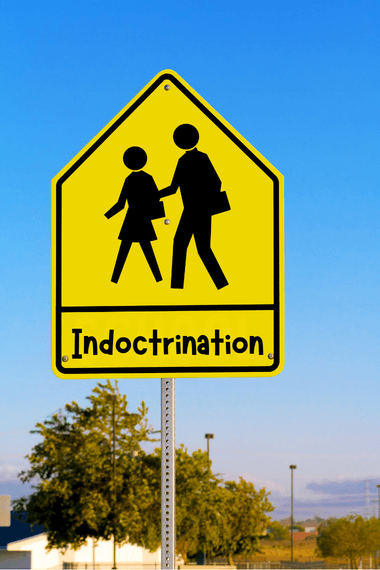
The idea of keeping religion out of public education has been around for a long time. Consequently, it is meant to protect children from indoctrination, which means teaching them to accept certain beliefs without question.
Teaching religion in public schools can become indoctrination if children are told to follow a religion before they can think for themselves. That’s why laws and court decisions often stress the importance of keeping religion neutral in schools.
Examples of the Dangers of Early Religious Indoctrination
Early religious indoctrination can seriously affect children’s development. Studies show that when children are taught strict beliefs without room for questions, it can limit their critical thinking and openness to new ideas.
In some cases, early indoctrination has been linked to a higher risk of totalitarianism and cult-like behavior. Children who are taught to accept authority without question may be more easily influenced by authoritarian groups or extremist ideas.
Moreover, indoctrination can sometimes involve censorship of alternative viewpoints, restricting children’s access to different kinds of knowledge. This can make it harder for them to make informed choices as they grow up.
Protecting children from early indoctrination helps them grow up free to explore different beliefs and form their own values.
In education, censorship can prevent children from learning about diverse perspectives.
Cults and High-Control Groups
Children who grow up in cults go through intense indoctrination. They are often kept away from society, and the leader’s demands come before their own needs. For example, these children might be treated like adults, made to work long hours, and given little schooling. They are taught to ignore their own needs to fit in with the group’s beliefs. This can lead to lasting trauma, such as anxiety, fear, and trouble forming their own identity.
One account explains that children in cults learn to “have no needs” because they must follow the leader’s demands to survive. Being cut off from the outside world and exposed to adult content without proper guidance can harm their development even more. Recovering from this kind of indoctrination often takes therapy and support from the community to help them regain independence and set personal boundaries.

Religious Trauma in Fundamentalist Settings
Many people say they experienced trauma from strict religious upbringings. For example, children raised in fundamentalist Christian settings have described feeling fear, guilt, and having to suppress their natural instincts because of harsh teachings. Additionally, some say they were forced into risky missionary work or punished for asking questions. Others talk about being baptized against their will or feeling like property instead of a person with rights.
These experiences can cause long-term problems with self-identity, mental health, and trust.
Psychological Studies on Indoctrination
Studies show that children who grow up with strict religious teachings often see the world in black and white. This can make them less tolerant and less able to adapt to different social situations. Indoctrination can also make children more likely to accept authoritarian or extremist ideas, where questioning is not allowed and obedience is expected. These environments may use censorship to block other viewpoints, which limits children’s freedom to think for themselves.
Psychologists warn that early indoctrination can slow down emotional growth and critical thinking, making children more open to manipulation and abuse. Protecting children from this helps them develop their own beliefs and values.
The Dangers of Early Religious Indoctrination
Children are easily influenced. If they are exposed to religious teachings too early, they might not learn to question or choose their own beliefs. This can lead to censorship, which means limiting their exposure to different ideas, and that can hurt their intellectual growth.
The Importance of Public Education Standards
Public schools, including charter schools, use standards meant to give students a fair and balanced education. As a result, this helps make sure children are not taught just one set of beliefs, also known as an ideology.
By keeping education neutral, public schools let children explore different ideas and form their own beliefs. This approach supports freedom and diversity.
Takeaways
The 9th Circuit Court’s decision confirms that charter schools are public schools and must meet public responsibilities. Parents can choose to homeschool, but if they pick public or charter schools, they agree to follow public standards.
The question is: Should children be taught a specific religion before they can think for themselves and make their own choices? History and law show that protecting children from early religious indoctrination is important for their freedom and development.
Case Name
WOOLARD V. THURMOND, No. 24-4291 (9th Cir. 2025)
Court
United States Court of Appeals for the Ninth Circuit