Think About This
Should we trust robots to keep our planes safe?
Take a moment to consider your stance on this issue before reading on.

Introduction
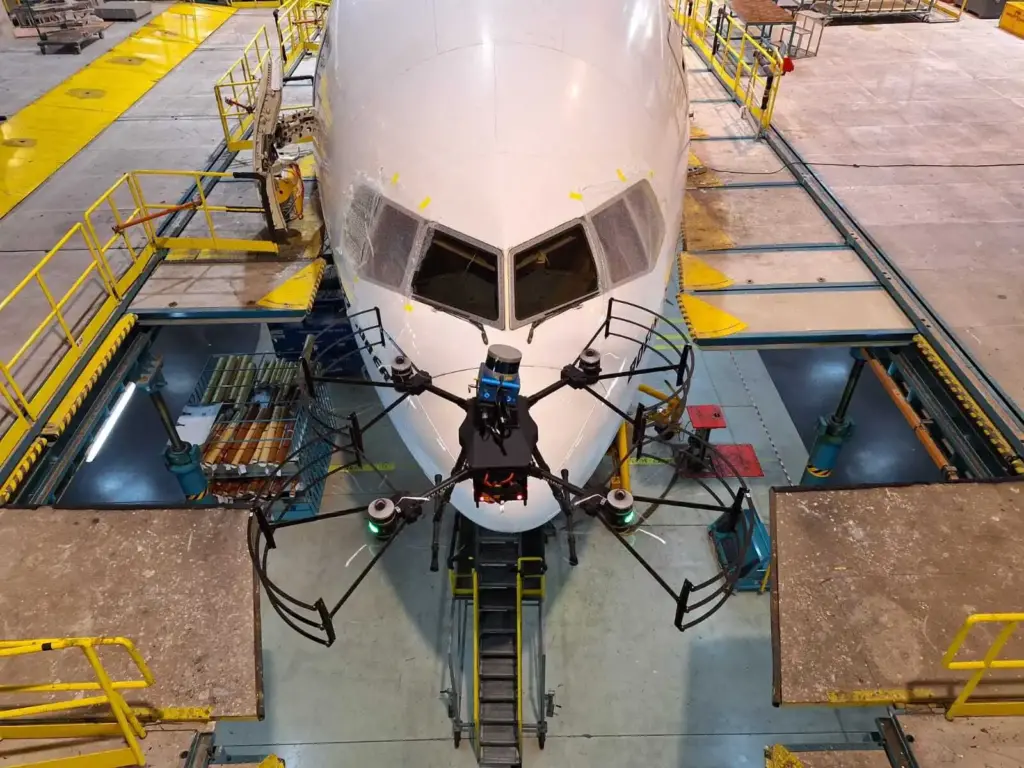
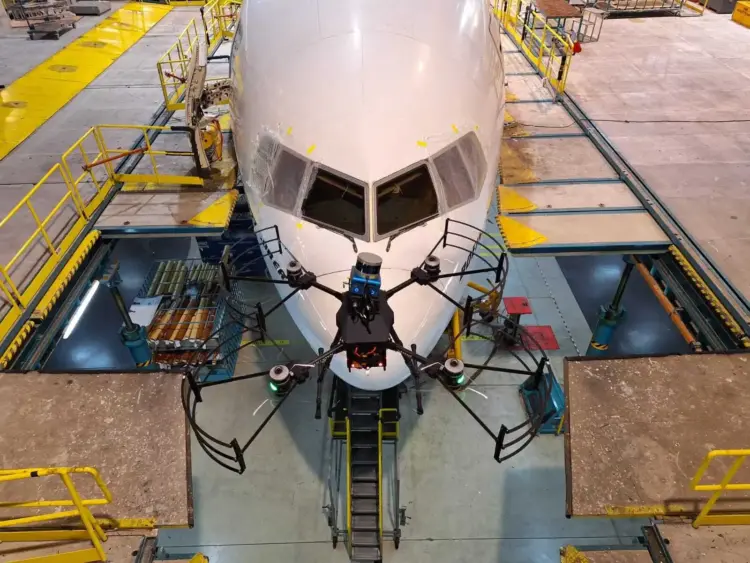
NASA is funding new tech that could change how we check airplanes. They’re backing drones to inspect planes before flights.
This could make flying safer and save time and money. But it also raises questions about the role of technology in our lives. Let’s explore what this means for air travel and our society.
How Drone Checks Work
Near Earth Autonomy, the company behind this idea, says their drones can do in 30 minutes what usually takes 4 hours. Here’s how:
- A drone flies around the plane on a set path.
- It takes detailed pictures of the plane.
- Experts can look at these pictures from anywhere.
- They compare new pictures with old ones to spot problems.
To see this technology in action, watch this video from Mainblades, a company working on similar drone inspection systems:
“This could save airlines $10,000 for every hour a plane isn’t flying.” – Near Earth Autonomy spokesperson
But is saving money worth the potential risks? Let’s look at both sides.
Good Things About Drone Checks
| Benefit | What It Means |
|---|---|
| Saves Time | Checks are much faster |
| Saves Money | Fewer delays mean less lost money |
| Safer for Workers | No need to climb on planes |
| Might Catch More Issues | Drones take very clear pictures |
| Expert Help from Afar | Specialists can check from anywhere |
Possible Challenges
While drone checks sound great, there are some things to think about:
- Can drones really work as well as people?
- How do we keep the system safe from hackers?
- Will air safety officials approve this new method?
- What happens to workers who might lose their jobs?
- Are we relying too much on robots instead of people?
These are tough questions without easy answers. What do you think?
Learning from Past Mistakes: The PG&E Story
To see why good checks matter, let’s look at what happened when a power company cut corners.
When PG&E Didn’t Check Well Enough
What Happened: PG&E in California stopped checking their equipment closely.
Result: In 2018, their faulty equipment started a fire that:
- Killed 84 people
- Destroyed a whole town
- Cost the company billions
What We Learned:
- Regular, close checks are very important.
- Quick looks from far away can miss big problems.
- Trying to save money on safety can lead to disasters.
“We can’t put money before safety. Too many lives are at risk.” – California State Fire Marshal
Watch this video to see what can happen when safety checks go wrong:
This video shows a giant fire that hurt many people. It’s not about planes, but it teaches us why checking things carefully is so important.
When we don’t check things well, people can get hurt. This is true for planes, power lines, and many other things that keep us safe.
The Future of Safety Checks
As we embrace drone technology, the future of safety checks is evolving rapidly. Here’s a glimpse of what’s coming:
- Now: Drones inspecting planes, reducing human error but raising privacy concerns.
- Soon: AI predicting failures before they happen, potentially saving lives but relying heavily on data collection.
- In 5 Years: Nanobots repairing planes mid-flight, revolutionizing maintenance but introducing new risks.
- In 10 Years: Quantum sensors detecting microscopic flaws, offering unprecedented safety but at enormous cost.
- Far Future: Fully autonomous aircraft with self-healing materials, eliminating traditional inspections but removing human oversight entirely.
Which of these excites you the most? Which worries you? Consider how each advancement might impact jobs, privacy, and our control over technology.
Finding the Right Mix
As we use more tech, we need to:
- Use tech to help people, not replace them
- Train workers to use both old and new ways
- Often check if new systems work well
- Make sure someone is in charge, even with robots
Wrapping Up: Using New Ideas Safely
NASA backing drone checks is a big step for flight safety. It could make flying safer and save money. But we need to be careful as we use this new tech.
The PG&E story shows what can go wrong when safety checks aren’t done right. As we start using drones, we must make sure they work with human experts, not instead of them.
The future of safety checks will mix new tech with human know-how. By learning from past mistakes and using new tools wisely, we can make flying safer for everyone.
What role do you think humans should play in this new world of high-tech safety checks?
Common Questions About Drone Checks
Q: Will drones replace human inspectors?
A: No, drones will help human experts, not replace them.
Q: When will we see drones checking planes everywhere?
A: Experts think it might happen in 3-5 years, if safety officials approve.
Q: Will drones at airports cause privacy issues?
A: There will be strict rules to make sure drones only look at planes, not people.
What do you think about drone plane checks?
Watch the Full American Greed Episode: Burned By Greed Concerning PG&E
Geoship’s New Bioceramic Dome:
%22%20transform%3D%22translate(3.3%203.3)%20scale(6.6914)%22%20fill-opacity%3D%22.5%22%3E%3Cellipse%20fill%3D%22gray%22%20cx%3D%22118%22%20cy%3D%2289%22%20rx%3D%2274%22%20ry%3D%2274%22%2F%3E%3Cellipse%20fill%3D%22%23fff%22%20rx%3D%221%22%20ry%3D%221%22%20transform%3D%22matrix(29.4606%2017.247%20-122.44157%20209.1495%2023.5%2024)%22%2F%3E%3Cellipse%20fill%3D%22%23fff%22%20rx%3D%221%22%20ry%3D%221%22%20transform%3D%22matrix(61.15995%20.6688%20-.2225%2020.34734%20213.7%202.5)%22%2F%3E%3Cellipse%20fill%3D%22%236d6d6d%22%20rx%3D%221%22%20ry%3D%221%22%20transform%3D%22matrix(-5.27928%2020.86353%20-27.7538%20-7.0228%20116.6%2051.6)%22%2F%3E%3C%2Fg%3E%3C%2Fsvg%3E)
The Sustainable Solution to Kanye West’s Failed Homeless Domes Kanye West’s attempt to provide domes for the homeless was noble, but it was stopped due to building code inspections. The hope of affordable housing remains, but a new leader is needed to carry on the mission. Geoship says they are that new leader. They have […]
6 US Navy aircraft suddenly vanished near the Bermuda Triangle- After a search, none of the 14 brave men were ever found

On Dec. 5, 1945, Flight 19, which infamously disappeared in the Bermuda Triangle, began a routine navigational training flight. Flight 19 was comprised of five TBM Avenger torpedo bombers. Lieutenant Charles C. Taylor led the flight. A seasoned naval aviator, Taylor had over 2,500 flying hours and several WWII combat tours in the Pacific. [i]…
See how your money is linked to one recycling center’s latest massive $7.6 million fraud

According to industry insiders, Southern California is the epicenter of fraud. Many families come together to recycle, which is an honorable endeavor. However, a family in Orange County, California, embarked on a recycling adventure that would rival Hollywood heist movies in audacity. This group of eight individuals devised a plan to exploit California’s beverage container recycling program through…
Not Ultra-Processed Food Label, New in CA: Helpful or Confusing?

What Is Ultra-Processed Food and Why Does It Matter? California lawmakers want to create a new food label. Assembly Bill 2244 would let food companies put a special seal on their products. The seal would say “California Certified Not Ultra-Processed.” But what is ultra-processed food? And will this new label actually help people make better…
AI Security Probed As Employees Input More Sensitive Info Into ChatGPT:
%27%20fill-opacity%3D%27.5%27%3E%3Cellipse%20fill%3D%22%23ffae00%22%20fill-opacity%3D%22.5%22%20rx%3D%221%22%20ry%3D%221%22%20transform%3D%22matrix(46.07332%2075.0316%20-34.86807%2021.41082%20165.3%2092)%22%2F%3E%3Cellipse%20fill%3D%22%23006f3e%22%20fill-opacity%3D%22.5%22%20rx%3D%221%22%20ry%3D%221%22%20transform%3D%22rotate(72.8%20-89.3%2095.4)%20scale(249%2059.34948)%22%2F%3E%3Cellipse%20fill%3D%22%23060008%22%20fill-opacity%3D%22.5%22%20rx%3D%221%22%20ry%3D%221%22%20transform%3D%22rotate(-125.8%20165.2%2064.4)%20scale(39.94711%20148.98176)%22%2F%3E%3Cellipse%20fill%3D%22%2331d82d%22%20fill-opacity%3D%22.5%22%20rx%3D%221%22%20ry%3D%221%22%20transform%3D%22matrix(-3.80908%20-83.88247%2037.30678%20-1.6941%2068%20118.2)%22%2F%3E%3C%2Fg%3E%3C%2Fsvg%3E)
Know How To Make Your Business Data Secure The Rising Concern: AI Services and Data Security Recent reports have raised concerns about the security risks associated with AI services like ChatGPT. As employees increasingly rely on these large language models (LLMs), questions arise about their potential threats when handling sensitive business data and privacy-protected information.Data Leaks and Legal Risks: […]