“The Iranian regime no longer enjoys immunity,” said former Israeli Prime Minister Naftali Bennett, describing his plan to strike the “head of the octopus.”
Estimated reading time: 9 minutes
Table of contents
The Shattered Head of the Octopus
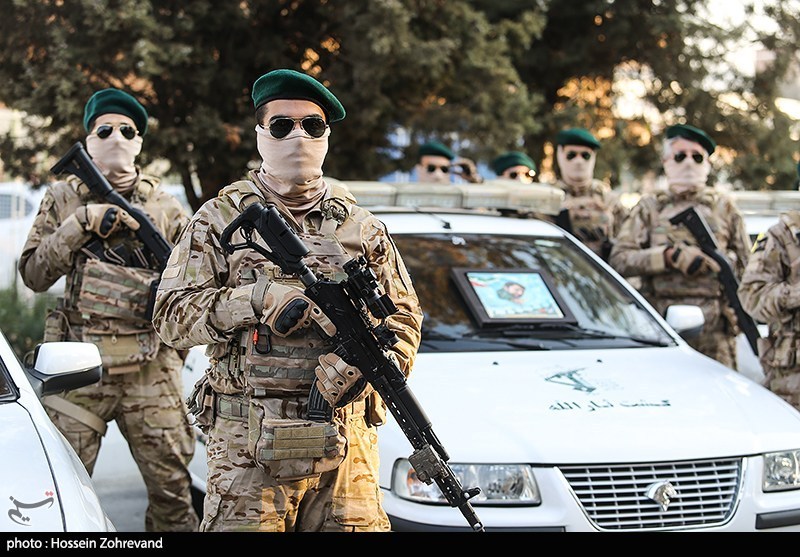
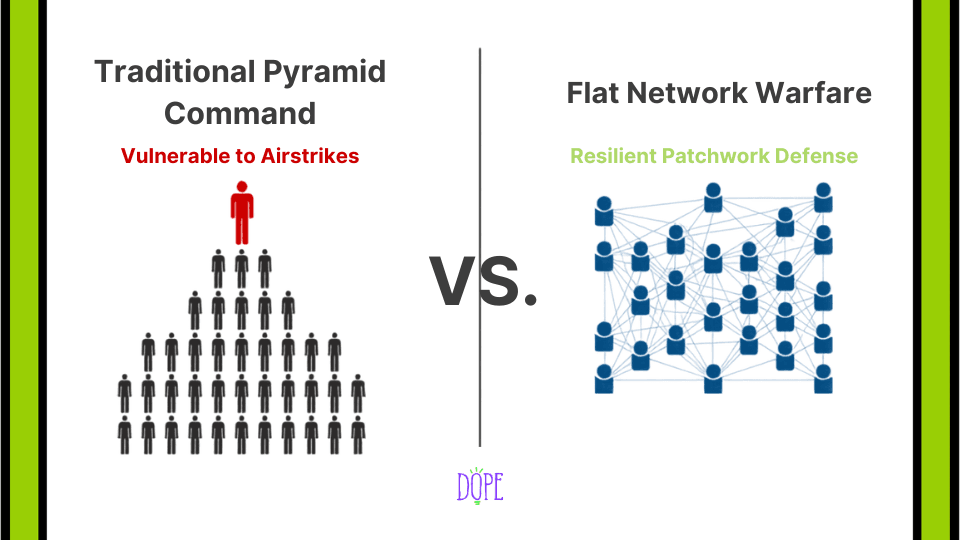
After losing its top leaders, the Islamic Revolutionary Guard Corps (IRGC) stayed intact. It quickly moved to a more distributed ‘flat command’ system. The Associated Press reports that Iran has given its commanders more control over militias in Iraq, allowing some groups to act without direct approval from Tehran due to wartime pressures.
Decentralizing the Guard: The Shift to Mid-Level Command
The IRGC used to follow a traditional military structure, where a few top generals in Tehran made the main decisions. Axios reports that Iran fired four missiles at Israel after an earlier Israeli strike in Beirut. This was the first direct Iranian missile attack since the April 8 ceasefire. U.S. and Israeli airstrikes killed dozens of senior officials, including Supreme Leader Ali Khamenei.
Western planners thought these losses would end Iran’s war efforts. Instead, the strikes set off a survival strategy. The Council on Foreign Relations says the IRGC supports militant groups in Iraq, Lebanon, the Palestinian territories, Syria, and Yemen as part of an ‘axis of resistance’ aimed at reducing Western and Israeli influence in the region.
Mid-Level Officers Take Charge
Now, instead of waiting for orders from a central headquarters that could be attacked or cut off, control has shifted to lower ranks, as emphasized in a detailed review by Manara Manara Magazine.
According to Human Rights Watch, Iranian authorities took responsibility for two coordinated attacks on commercial ships, the Safesea Vishnu and the Mayuree Naree, in the Strait of Hormuz on March 11, 2026. So, local commanders have some power to carry out such operations without waiting for approval from Tehran.
Later, after a U.S. Army Apache helicopter was shot down near Oman, local IRGC units quickly fired long-range missiles and drones at U.S. and allied bases in Jordan, Kuwait, and Bahrain.
Video below: “How Iran’s short-range missile and drone stockpile could shape the war’s trajectory.”
Strengthening Iran’s Patchwork Defense
This shift is central to the ‘Unity of Arenas’ strategy. By dividing its military into independent local units, Iran wants to create a ‘mosaic defense’ that makes it harder for enemies to disrupt its operations.
According to a report from Military.com, recent Israeli airstrikes specifically targeted Iranian military infrastructure as part of the ongoing conflicts in the region.
Strategic Patience Fades and Proxy Rules Change
For years, Iran’s regional strategy relied on “strategic patience’ and keeping conflicts separate on different fronts.
Under this old “forward defense” model, Tehran treated its regional proxies—which are separate, independent militant groups like Hezbollah in Lebanon, Hamas in Gaza, and the Houthis in Yemen—like a protective shield.
Iran gave these groups money and advanced weapons, but kept their operations separate.
According to the Carnegie Endowment for International Peace, while Hamas has been engaged in conflict with Israel in Gaza, Hezbollah has adopted a more restrained approach in Lebanon, which helps keep significant battles away from Iranian territory and supports Tehran’s ability to influence the situation while maintaining plausible deniability.
The forward defense approach failed in recent conflicts. Western forces bypassed the local groups and attacked Iran directly, launching Operation Epic Fury and targeting leadership centers in Tehran.
The Failure of Fighting Through Middlemen
As a senior U.S. defense official said during briefings hosted by the U.S. Naval Institute (USNI) News,
“The era of fighting entirely through middlemen is over; the cost of aggression is now being brought directly to Tehran’s doorstep.”
The Carnegie Endowment reports that Hezbollah has often launched rockets and drones at northern Israel and beyond to keep pressure on Israel’s home front, weaken its air defenses, and create ongoing instability.
With Iran’s help, these actions can also cause direct damage to Israel. Now, these groups have been joined into a single network designed to launch a rapid multi-front war if any part is threatened.
The Multi-Theater Multiplier
Hover over the operational hubs to view the interconnected “Unity of Arenas” web.
Flat command core directing overall regional synchronization strategy.
Primary northern vector; deploys high-volume missile and drone swarms.
Coordinates multi-front transit corridors and local asymmetric rocket groups.
Southern geoeconomic choke point locking down crucial maritime lines.
Weaponizing Geoeconomics: Choking the Chokepoints
Under the ‘Unity of Arenas’ doctrine, damaging the economy has become a main goal of war, not just a side effect. A RUSI commentary notes that recent attacks on commercial shipping in the Middle East by groups linked to Iran, such as the Houthis, have used simple tactics, even with advanced weapons, instead of relying on large, centralized naval fleets.
Local IRGC units and Houthi forces act independently to target commercial shipping. By using thousands of inexpensive sea mines, anti-ship missiles, and slow-moving kamikaze drones, these spread-out groups can disrupt global supply chains without waiting for approval from Tehran.
Forward Defense
How Tehran historically projected power from a safe distance.
Unity of Arenas
The modern flat network defense pact locking in regional allies.
According to the Washington Institute, Iran has developed innovative asymmetric naval tactics that allow even local commanders to target critical assets like oil tankers, quickly impacting international energy markets.
Supply Chains and Digital Funding
To keep these operations going during major electronic blackouts, the flat network depends on a strong supply system.
According to a report from ScienceDirect, the use of bitcoin allows transactions to be completed through a decentralized and global system, giving some protection against financial censorship.
This could allow local cells to move money outside traditional banks. The report also notes that their weapons are stored in secure underground tunnels, making them difficult to target with regular airstrikes.
Centralized Blockade
- Requires large, visible fleet: Demands massive, conventional naval power concentrated in open waters.
- Easy to target: Large carrier groups and warships are highly visible on radar, easy to track, and vulnerable to conventional counter-strikes.
Asymmetric Choking
- Uses cheap mines & local drones: Deploys ultra-low-cost, disposable technology that handles operations independently.
- Hard to predict: Hidden entirely within localized, distributed nodes, making them nearly impossible to sweep or neutralize before they strike.
How Iran Tries to Outlast the West
Tehran’s main strategy is to wear down its enemies over time.
According to a report from the Council on Foreign Relations, the Islamic Revolutionary Guard Corps (IRGC) openly criticized Iran’s Foreign Ministry for agreeing to keep the Strait of Hormuz open while a U.S. blockade continued to restrict ships from entering or leaving Iranian ports.
Critical Chokepoint Metrics
Of the world’s liquefied natural gas and petroleum flows directly through the Strait of Hormuz.
Asymmetric Cost Ratio: A single $2,000 kamikaze drone requires a $2,000,000 naval air-defense missile to intercept.
Sanction Insulation: Localized crypto nodes and illicit smuggling networks completely bypass SWIFT monitoring.
The rise of the ‘Unity of Arenas’ doctrine gives Washington and Jerusalem a new strategic challenge. For decades, Western military plans focused on striking command centers, removing leaders, and breaking the enemy’s will to fight.
How do You Counter a Network Without a Center?
In this new flat warfare system, that approach no longer works. The Jerusalem Post reports that Tehran’s military now uses a decentralized command system, allowing mid-level commanders to carry out independent retaliatory strikes. This makes it much harder to disrupt the network with traditional airstrikes. If U.S. or Israeli forces destroy a command center in one area, nearby groups continue fighting, launching drones, and blocking shipping lanes on their own.
This resilience forces Western leaders to choose between launching a large, costly regional campaign to eliminate every group or accepting a risky new reality where local commanders can trigger a crisis at any time.
Dangers of Losing Central Control
In the end, Tehran’s risky strategy could backfire. While a decentralized structure protects the IRGC from being destroyed in a single strike, it also means Iran has less central control. A local commander acting on bad information or unchecked aggression could easily cross a red line and trigger a major international response.
This flat network might wear down its enemies or accidentally start a war that destroys the regime. Either way, the old rules of Middle Eastern deterrence no longer apply. They have been replaced by a flexible, multi-front system.
Policy Recommendations for Western Decision-Makers
Experts suggest that western governments should invest in intelligence networks, partnership programs, and ongoing surveillance to find and track mid-level commanders and decentralized operational cells. Focusing on human intelligence (HUMINT) on the ground is key for gathering useful information about local decision-makers and their connections across the network.
Signals intelligence (SIGINT) and open-source intelligence (OSINT) should also be expanded to watch secret communications and real-time social media activity, which can show movement patterns, logistics, and command changes among decentralized units. Using imagery intelligence (IMINT), including commercial satellite monitoring, can help spot changing weapons stockpiles and smuggling routes.
Working more closely with regional partners, along with targeted cyber and information operations, can disrupt communication, logistics, and coordination within Iran’s spread-out network without just relying on removing leaders.
If you have any questions or want to report a typo, tip, or other concern, please do not hesitate to message DOPE Quick Reads.